
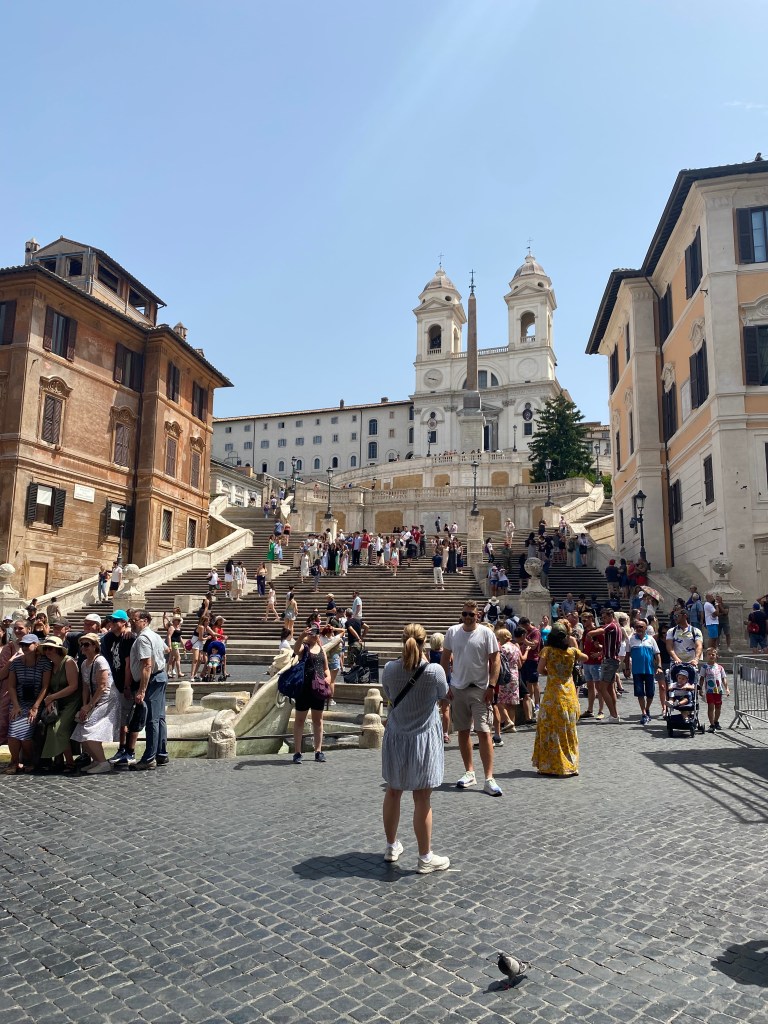
A quick search will tell you that Rome receives 51.4 million tourists every year. This is not surprising considering it has some of the most famous sights in the world and seems to be on every international traveler’s bucket list. The more surprising number is that the population of Rome is only 2.75 million.
This isn’t a small city by any standard, but it does mean that locals are likely to feel the impact of tourism every day. Residents often report that many areas feel “overrun” and that tourist-related businesses are displacing local shops and housing. The city is the very definition of a cultural hub, boasting historic sights, extraordinary art and museums, unique architecture, and amazing food. However, when you see a city that is overrun with tourists, you really start to think the city’s modern-day society and culture suffer. Locals move out of certain areas because the quality of life, or the quality of the experience, has deteriorated. As a tourist, I loved seeing the typical sights. I don’t think I need to go back, though, or if I do, I would need to explore other areas.
If culture is a shared way of life of a group of people, maybe the new modern culture of Rome is, in fact, tourism. Locals work in it, the city is built around it, small businesses cater to it, and the economy revolves around it. I have read about historic fishing cultures and mining cultures in rural areas where life revolves around the industry. At this point, it seems Rome is a tourism culture, similar in many ways to Orlando, Florida.
 Shifting Lenses
Leave a comment